Sunday, November 29, 2009

Post-thesis Sunday

Unlike the last few Sundays, I will say that, here at The Notes Taken, not much has been happening. Our contributors are graduate students or professors, and the end of November is the beginning of the end of the semester. For myself, the last two weeks included a conference in Memphis, trying to write an abstract for a conference in June, and my thesis defense.

Regarding the defense, it's still too close for me to get some perspective on it. I plan to write about the process once the final draft has been submitted to the Faculty, which I project to be around December 9, if not earlier, because I passed with no revisions, only corrections of grammatical errors, etc. I would like to say, however, that a friend of mine, who also started the same semester as myself (Fall 2004), successfully defended his thesis on Friday. So I would like to send out a congratulations to Robbie Moser.

Though things on the blog were brief this week during upcoming week I will be working on several pieces, including one about how not to write a book review, taking as my focus one published in the NY Times.

If you have some spare time, I suggest checking out the geography of a recession, and also John Richardson's "Bacon Agonistes" in the New York Review of Books, especially if you would like to know why, as Richardson writes,
Setting twentieth-century kinkmeisters against Renaissance masters has evidently paid off, and attracted a vast new public into museums they might not have otherwise visited.
Now's also a good time to catch up on all our posts in November; thus far we've published 29 (including this one) in 29 days.

Saturday, November 28, 2009

Benjamin's Writings on Hashish

I've been trying to work up an abstract on Walter Benjamin for the CPA meeting in June for a panel on German philosophy with two friends. With all that has been going on lately, I haven't really had a chance to do so, which is complicated by the nature of Benjamin's work, being quite diverse and yet singular. So I've posted this piece for some motivation (it's due on Monday), and for all of those who have been nice enough to visit the site on the recommendation of The Tao of Stieb. This review was originally published in De Philosophia, Volume 19, number 2, page 124.

The recent interest in this translation of Walter Benjamin’s texts on hashish seems to indicate that the general reading public maintains a greater interest in drug-literature than philosophy. Or, perhaps, this book forms the comical obverse of the proliferation of volumes such as On Belief, On Authenticity, et cetera. Typically, one’s journals never face the scrutiny of broad readership, but apparently hashish should not be left to specialists. As such, On Hashish takes the form of a light-hearted chapter in what is often considered as Benjamin’s pensive, and terminally tragic, biography.

The book is divided into two parts. The first is composed of Benjamin’s protocols of drug experimentation. Some are written by him, while others are composed by either the doctors administering the dose, or Benjamin’s friends. The second part of the book compiles several completed texts, along with excerpts from other texts and letters with passages on intoxication. Despite Benjamin’s repeated complaints concerning dosage, the protocols are nothing like the libertarian hedonism of say William S. Burroughs. Benjamin’s interest in hashish and opium had a basis in both literature– especially Baudelaire’s Paradis artificiels (144)– and his philosophical-political preoccupations, which fall somewhere between the Frankfurt School and Bataille’s Collège de Sociologie.

What is notable in Benjamin’s texts is the refusal to give intoxicated experience a mystical status. Instead, as in the excerpts from his essay “Surrealism,” intoxication provides the possibility of what he calls “profane illumination,” a materialist anthropology. However, in a properly dialectical twist, the immediate experience of intoxication is overtaken by the concepts which allow us to find the surprises of intoxication in the everyday world. Thus, “the most passionate investigation of hashish intoxication will not teach us half so much about thinking (which is eminently narcotic) as the profane illumination of thinking will teach us about hashish intoxication (133-134).” This dialectical approach is much more apparent in the finished texts, while the protocols record the brief hallucinations, non sequiturs, erratic behaviors (for instance, Benjamin– apparently sober– “offers a light when J picks up a wafer”) and fleeting lucidity.

The bulk of the finished texts are comprised of two stories: “Myslovice–Braunschweig–Marseilles” and “Hashish in Marseilles.” Both draw heavily on the fourth protocol, dated Saturday, September 29, 1928. A Freudian knows that the true story is in repetition: first, we encounter a rather literary set of notes (the protocol); second, a version published in 1930 which Benjamin ascribes to a fictional character; and finally, a ‘memoir’ version published in 1932. Between the slips and displacements, the reader is left to reflect upon questions of narrative, intoxication, and identity; if, of course, these reflections have not been interrupted with bursts of laughter…

Wednesday, November 25, 2009

Tuesday, November 24, 2009

Thesis Defense


Here it is (update: don't forget my posts--here and here-- on Schelling's work):

Ph.D. Philosophy; Thesis Defense

Devin Zane Shaw: Freedom and Nature in Schelling's Philosophy of Art

Thursday, November 26th, 2009 at 9:00 a.m. in Room DMS 3105, Desmarais Hall (55 Laurier East)

Thesis Supervisor: Dr. Jeffrey Reid

External Examiner: Dr. Frederick Beiser (Syracuse University)

Internal Examiners (in alphabetical order): Dr. Denis Dumas, Dr. Douglas Moggach, Dr. Sonia Sikka

President: Dr. Hilliard Aronovitch

Bienvenue à tous Welcome to all

Thoughts on the Sartre Conference

I can't say I saw too much of Memphis (mainly the neighborhood at Cooper/Young, Beale Street and the National Civil Rights Museum), but I can say that I saw a lot of good papers at the most recent North American Sartre Society meeting, and that I met a lot of good people.

Before going, I was struck by how the conference was organized: the papers were held on the University of Memphis campus, but there was also a performance of Sartre's No Exit at the Brooks Museum on Thursday night and the keynote addresses and dinner at the Civil Rights Museum. For most conference organizers, multiple destinations over a city as large as Memphis, pose a lot of logistical problems, but the NASS organizers pulled it off admirably.

The conference was an excellent time. The staged reading of No Exit was so strong that it was easy to forget that the actors were holding their scripts through parts. I would reference the director, but her name is not in the schedule, which is too bad: she deserves a lot of credit for her work.

The plenary session on the anniversary of the Critique de la raison dialectique, including talks by Robert Bernasconi, Ronald Aronson, and Thomas Flynn, was thought provoking, and during the question period, Flynn's quick wit carried the day. The panel on Aronson's Living without God was also a high point, with contributions from Adrian van den Hoven, Ron Santoni, and Matt Eshleman. To list all the people I met and all the good conversations I had would be a bit much, but I can note that Bill Martin convinced me that I should be reading the later Althusser, which I already knew, but was just trying to put off. Needless to say, when I returned home I ordered a copy.

Most importantly, the conference motivated me to keep working on Sartre and the questions and problems that I find in his work, that it is worth taking up a new project and seeing where it goes, and (almost) wherever it goes, the next Sartre society meeting will be willing to listen. The organizers, primarily (to my knowledge) Christine Daigle and Jonathan Judaken, deserve praise for their efforts to make the conference both welcoming and worthwhile.

Saturday, November 21, 2009

Sunday and David Foster Wallace


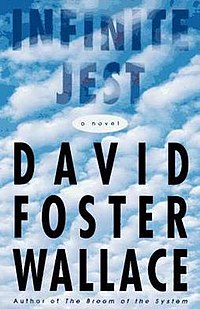
November has seen a lot of literary-philosophical in-review action here at The Notes Taken (with pieces, this week, on colonialism and more colonialism, California, Zizek's latest, travel reading, and Maoism in Nepal) which I have been enjoying from afar as a mere fly on the wall (one of the perverse ironies of teaching literature being the lack of time it allows for actually reading new books). For the last two weeks I've been going through David Foster Wallace's illimitable, inimitable magnum opus, Infinite Jest, with my American lit Honours seminar class at Nipissing U., and so but my review this week explores some of the highlights of D.F.W.'s web presence.

I'd like to take this opportunity to thank to Marc Pritchard, Devin Shaw and Khalia Scott, whose recommendations finally motivated me to read Infinite Jest back in 2007, an unforgettable and life-altering experience that, while it nearly prevented me from completing my doctoral thesis on Brockden Brown and Poe, induced a number of nights of near-sleepless, blink-eyed over-poring, and left me with an over-powering urge to make unintelligibly pseudo-Hegelian declarations about the end and overcoming of postmodern fiction, was eminently worth the danger. I'd also like to thank diligent Nipissing students Leila Dunn, Jennifer Bennison, Kyla Morin and Shawn Fetterley for sharing some of these links, as well as their own thoughts on the novel (which I felt like Gerhardt Schtitt for assigning to undergrads, but which has made at least some converted Infinite Jesters.)

Here is the David Foster Wallace Wiki, which features links to many of the best web entries on Wallace, which (aside from the Lipsky article) I won't reproduce here - a great resource for anybody reading (which is to say by default both working on and playing with) the novel. It also features spoiler-free, page-by-page annotations to the novel.

Here is David Lipsky's moving and highly insightful account of Wallace's life and writing for Rolling Stone.

Here are a number of links to audio interviews with David Foster Wallace, including an interview with Michael Silverblatt recorded just after the publication of Infinite Jest, where Wallace discusses the importance of fractals and other elements that influenced the novel's evolving structure, and Silverblatt's commentary on learning of Wallace's death.

Here is the Harper's (shortened) version of Wallace's essay "Tense Present," which appears in its gloriously prolix full-length form in the collection Consider the Lobster.

Speaking of lobsters, here is an extract from that book's titular essay, used by a website on vegetarianism. It also includes a little biographical information on Wallace (who was not, as he confesses in "Consider the Lobster," himself a vegetarian, although he couldn't quell his ethical qualms about eating meat.)

Here is the online version of the full article, as published in Gourmet magazine (I find the juxtaposition of these two venues too delicious to pass up.)

Here is a brief meditation for The Atlantic by D.F.W. on terrorism

Here is a recently post-I.J. interview with Wallace by Valerie Stivers (her account of her nervousness prior to meeting him, esp. her musing about what H.I.D. may have been hidden by his photo-pervasive bandanna, is hilarious)

Here is a New Yorker article on Wallace's struggles writing his last (and soon to be posthumously published, although unfinished) novel, The Pale King

Here is a New York Times obituary of Wallace and review of his writing.

Here is a Wall Street Journal article that summarizes Wallace's Kenyon commencement speech (which was formerly available online, but has since been copyright-tightened due to the publication of the quasi-koan-like, over-spaced edition, which you can buy here, if you are so inclined, paying for one to two sentences per page and dooming countless trees).
http://www.amazon.com/dp/0316068225/ref%3Dasc_df_0316068225911777/%3Ftag%3Daskcomel-20%26creative%3D380333%26creativeASIN%3D0316068225%26linkCode%3Dasn
http://online.wsj.com/article/SB122178211966454607.html

Here is "Infinitely Sad," Troy Patterson's retrospective article on Wallace, which explores Wallace's ambivalence toward literary Narcissism.

Here is a useful collection of links to critical responses, most of them early, to Infinite Jest.

Here is a glossary of terms from the book, each linked to its definition and etymology on answers.com (not as thorough as DFW's beloved OED, but it's a start)

Here is a link with some excerpts from Robert Bell and William Dowling's A Reader's Companion to Infinite Jest (which I have not yet read - the book, I mean, not the excerpts).

Here is a link to the Infinite Summer forum, a product of the e-collective reading of the novel that went on during the summer of 2009, a project which is beautifully apropos of the novel's preoccupation with isolation and the quest for community,

Here is a link to Gerry Canavan's blog, with an in-process discussion of irony, consumerism, and Johnny's Gentle's Reaganesque presidency in the novel (on that note, I just realized during my re-read that Chretien (aka "J.J.J.C.") is still the Prime Minister - err, I mean the "Secretary of State" of Canada during the novel, Wallace's prescience perhaps lacking the pessimism necessary to foresee our current P.M., with whom Pres. Gentle would no doubt get along rather smashingly.)

Finally, here is a chatroom-convo from 1996 in which "dfw" (either the author, or a clever impostor) makes some tantalizing observations about I.J. (and some funny typos, too).

Thursday, November 19, 2009

Marx, Lenin, Mao, Nepal?

The recent political struggle in Nepal has taken a course that, ideologically, couldn't seem less possible in the 21st century: there the Maoist party (now called the United Communist Party of Nepal-Maoist) took up armed struggle in 1996 against the repression of Nepal's government, and in the last few years has brought down the monarchy and restored parliamentary democracy. Despite this, social struggle in Nepal has not drawn the same kind of attention that the Bolivarian Revolution has. There are few books about the subject, and even articles that are not ideologically loaded against the struggle are difficult to find (for the non-expert). For books, after some research, I chose Li Onesto's Dispatches from the People's War in Nepal (Pluto, 2004), which is written with much sympathy for the struggle, but not without some criticism.

Obviously, that book's story ends five years ago. For more recent developments, I recommend reading Gary Leupp's article "The Andolan in Kathmandu and the Revolution to Follow" (in Counterpunch), about the more recent political struggle in Nepal. By 2005, the Maoist party controlled 80 percent of the country, and, as Leupp summarizes,
agreed to the 2006 Comprehensive Agreement with the political parties whereby they would all jointly work to bring down the king, restoring parliamentary democracy, while the Maoists would lay down their arms under UN supervision, ending the war. A key provision of the Agreement was that the soldiers of the People’s Liberation Army be integrated into the Nepali Army (formerly the Royal Nepali Army).The Maoists also demanded the convening of a Constituent Assembly to write a new constitution, and the proclamation of a republic. They won these demands, and in the April 2008 elections for the assembly, won 38% of the vote, twice the number of the next party.
To say that is was a surprise to many Western commentators that the Maoist party-- which, incidentally, is not on good terms with post-Maoist China-- won an election after setting down its arms would be an understatement.

However, when the Nepali army refused to integrate, the Maoists quit the government and returned to extra-parliamentary tactics with the goal of forcing the integration of the military. The basic idea behind this move is that without an integrated military, there is no possibility of true "civilian supremacy," because the military is not neutralized as a political force. According to Leupp, the UN Mission in Nepal, with very little ideological interest in doing so, has found that the government is at fault. Leupp concludes,
the Maoists who now boast they have all Kathmandu behind them can say much of the world as represented by the UN secretary general agrees with their goal of “civilian supremacy,” and that the 22-party coalition with the UML and Congress at its head, linked to the Army, India and ultimately U.S. imperialism is the isolated, marginalized force.

Wednesday, November 18, 2009

Imperial Projects in Peripheral Madness


Foucault has asserted that a great confinement took place in Europe, with the proliferation of the asylum, during the early modern period. Waltraud Ernst’s Mad Tales from the Raj: the European Insane in British India, 1800 – 1858, published by Routledge in 1991, investigates the role of the Asylum in India and attempts to ascertain whether this can be said of its propagation there. She seeks to understand the relationship of the institution to the colonial project in the British Empire. She was originally trained as a cultural psychologist and now teaches and researches the history of western medicine during the modern period. In this book she uses her knowledge of psychology to investigate some of the treatment strategies of the European soldiers put in the care of the mental health professionals in India. This book spreads itself awfully thin in terms of the treatment of several topics, especially given how petite it is, less than 200 pages, yet to her credit Ernst accomplishes this feat.

Ernst sums her goal in writing this work as a twofold endeavor to elucidate the relationship of the mental asylum to colonialism and to develop a theoretical framework in which to understand mental health in its socio-political context. While there is no doubt that Ernst successfully tells a good story as to the loci of the European insane within the European colonial context. Additionally she seeks to examine the role the clinic had on the treatment of the insane as well. A lot of references are made to Foucault, where Ernst is quick to accuse him of playing fast and loose with the historical record. She furthermore indicates that asylums were not anywhere near the Panopticons that one is made to believe in reading Foucault. She also gives passing glances to the notion that the clinics played a role in the establishing of colonial domination, instead argumentatively favoring the idea that the clinics were established as a last ditch effort to save European face in the colonial context.Europeans, she discovered, did not want their own seen by Indians as susceptible to insanity and were quick to either remove them back to Europe or else hide them in the clinics established in India. Which doesn't undermine arguments about colonial legitimacy. There is definitely more room to expand in this analysis.

While the work mobilizes a lot of primary material, very little thick analysis is proffered. Instead the book fills a void in a dearth of knowledge about the introduction of the treatment of mental health in India. She excellently gives a sweeping overview of the half century this book covers but much remains to be done on several levels. While she couldn’t have been expected to expound on every detail of the multiple topics this book stretches across, it nonetheless argues its topics lucidly and with quite a bit of humor.

First as Tragedy, then as Farce


Slavoj Zizek's new book (Verso, 2009) examines the current world financial crisis and attempts to delineate a coherent Leftist response. The book is relatively accessible, and readers frustrated by his unruly and largely redundant previous effort In Defense of Lost Causes will find Zizek back in top critical form.

The current crisis is read in light of a comment of Marx's, to the effect that historical events must occur twice: first as tragedy, then as farce. September 11, 2001 (treated previously by Zizek in the engaging Welcome to the Desert of the Real, Verso 2002) was the tragic moment showing the naive utopianism of the Fukuyamean/Clintonite "happy 90's"; the bailout of banks and manufacturers by Congress is its farcical repitition (farcical because, among other things, it answers this naive utopianism with the spectacle of failed millionaires being put on a kind of welfare). As always, Zizek zeroes in on the counter-intuitive features of his historical conjuncture - the populist Right is after the wrong targets, the liberal Left is shoring up the big companies - with a view to unmasking their ideological core.

The second half of the book concerns the "communist hypothesis" (Badiou's term) in the present conjuncture. The communist hypothesis, discussed by Badiou in recent texts, is the hypothesis that communism is the right political solution (accepting, of course, that attempts to work it out have hitherto failed). Zizek bets on this hypothesis; he emphasizes however that whereas both Actually Existing Socialism and contemporary liberal capitalism belie an utopian core, his communism is not guilty of a happy Hegelianism that would count history on its side. Rather, Zizek maintains that the Left should assume a coming social / environmental / biogenetic catastrophe, and work backwards to how it might have been stopped. In short, Zizek sees the task of the Left as stopping history in its tracks by communist means and for communist aims. One sees again his affinity for Lenin, who it will be recalled was a voluntarist, strategic reader of Hegel.

Some of the prescriptive vagueness of In Defense of Lost Causes is repeated here, but I believe that Zizek gives the outline of what could prove a compelling philosophical argument for a communist response. He lives up to his reputation for weaving philosophy, pop culture, politics and psychoanalysis into an engaging whole; ultimately, however, the philosophical meat of his arguments is to be sought in earlier texts (now on Verso as "The Essential Zizek").

Travel Reading


Traveling imposes its own kind of reading schedule, being that there are numerous external limitations to what one can plan on reading: the size of one's luggage or carry on bag, the size of the books, the time of the flight, layovers, etc. Each has their own specific challenge. I find that if I fly early in the morning, or red-eye, novels are probably the best, but no James Joyce or David Foster Wallace. Nabokov works sometimes (I read Laughter in the Dark on a red-eye), so does Michel Houellebecq (just read one though; my friend Mark reports that he's crossed parts of The Possibility of an Island and Whatever, because he read them on the round-trip from Ottawa to Glasgow for a conference) but I've probably read more Vonnegut novels on airplanes than I have any other author. That includes parts of Slaughterhouse-Five, Cat's Cradle, Timequake, and maybe also parts of A Man without a Country. For my morning flight to Memphis, I've decided to try Jailbird. It's not that my decision is based on ease. It's based on organization: Vonnegut's short chapters and sections make for a good read when there are constant interruptions to one's attention span.

I'm also taking Zizek's First as Tragedy, Then as Farce for my flight back (in the afternoon), and Michael Lowy's Fire Alarm (on Walter Benjamin), so that I can try, unrealistically, to work a bit on an abstract about Benjamin's concept of history.

And then, of course, there's the whole Sartre conference...which is why I'm going in the first place.

Tomorrow, I will have a post up about Nepal, thanks to Blogspot's ability to schedule the publication ahead of time.