Showing posts with label Korea. Show all posts

Sunday, December 12, 2010

Sojourning in the Heart: Yi Sang’s and Ours


A good friend of mine I met in Korea, and a well known artist here as well, recently recommended the book reviewed below. It turned out that the book is well known and taught throughout middle school and at the university level as well. I read it without knowing what was coming and nothing about the author making the visit into its story all the more dazzling. On this personal note, I will not be giving away any of the sordid details of this work of art. Before we set our feet upon the plain and begin our journey, I must say that this book reads like a sojourn in the self. It carried me to places within, I hadn’t visited in epics gone by in my heart. If you care the slightest about literature, you must spend time in these pages.

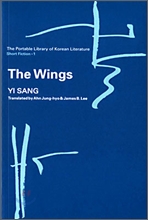
Yi Sang’s The Wings, accompanied by the equally, if not more psychological Deathly Child, and Encounters and Departures, dances with realism, surrealism, and early twentieth century avant-garde while moving fluidly - though unexpectedly - between essay, dialogues within narrators' thoughts, poetry, and even song, in one seamless flow. Published by Jimoondang Publishing Company in 2001 and translated by Ahn Jung-hyo and James B. Lee from the original 1936 Korea Journal publication, this book has a history of thorough examination here in Korea. The book serves as seminal text in Korean literature for obvious reasons. The first two paragraphs alone made me put the book down to think about what the horizon had in store upon ascent. The allegories and metaphors pushed me forward on the trek and twists and turns came unexpectedly at each pass. While the term ‘twist’ gets thrown around too often, I haven’t felt this taken aback since the cliché of ‘becoming unplugged’ came into regrettable vogue after that unnameable movie was released some years back. But perhaps these short novels, three, topped even that cliché too.

Given the release of numerous translated Korean works of famous literature by the Jimoondang Publishing Company, it is noteworthy that this book was published first in the series. Here, on this site, I’ve taken the privilege of discussing several of the books in this series, but I must say if you read only one of them, this is the one. To further praise these tales I add that I will actively seek out other works by the author in the immediate future.

Yi Sang, in allusion, offers these stories as confessions of his own history. Though no doubt shaded by symbolism, they tell the history of a man who lived the sort of life I think most people fear they may live, perhaps secretly. For this reason the narrative all the more moves its readers' hearts. The characters, and the author lived, loved, and suffered as real humans do. He leaves no trace of his true character and his characters alone. He offers himself up in the form of his protagonist as an inveterate liar, with passages and tails within tails to back up the confessions of these and other personal defects.

The characters read like friends we all have and they have their basis in his own. The allegories and allusions, though thick, barely cover our real lives, the pains of poisonous relationships, and the truths we hide from ourselves and others. Shocking is the discovery of this book only while living here in Korea. I think translations of these tales should/could have easily found there way into the classrooms of my own educational history. These remarkable journeys into this text made me burst out laughing in cafés in downtown Gwangju. And in the same sittings I all but wailed as well. What a strange sight I must have been while crossing these stories’ pages. What strange sights were seen in them too.

Tuesday, November 30, 2010

Korea in Fiction and Reality


Given the recent developments between the Koreas, my email inbox has been flooded by concerned friends internationally. As I sit in a café amidst largely nonchalant Koreans enjoying their coffees and sharing the latest Miss A tunes with their ipods and iphones, I wonder how people in the USA can possibly entertain the notion that they have any part of the US global empire? Or put in other words, given the warped media façade presented in the American states, how can it be possible for voters there to actually have any hand in the affairs here or anywhere else? Do Americans think their hand fed opinions are there own? The Korean coverage and the talk on the street over the events here don’t remotely resemble the media frenzy as seen on T.V.: in the USA. Given this thought, I see a good opportunity to review The Land of the Banished by Cho Chong-Rae, as translated by Chun Kyung-Ja and published by the Jimoondang Publishing Company in 2001. This book revolves around the life of a political and social outcast. Cheon Mahn-seok, our protagonist and perhaps antagonist too, lives a life of horrors; these are both afflicted from external circumstance and from his reactions to these as well.

The character development alone make this book an extremely worthy read. Cho works by moving backward and forward through Cheon’s life, juxtaposing his predicament in the present with his childhood, adolescence, and adulthood. At the time we meet our hero he has already climbed his way into his last days as a well aged man. The man came into his lot as an outcast from the town of his youth by participating in the killing of the former classes of power after the rise of the People‘s Army. But the author, Cho, does not simply leave his protagonist's life simply as that of a demented murderer of the former ruling and exploitative class. He instead fleshes our Cheon out by showing how he could have behaved so callously in the aftermath of his rise to rank. Cheon Mahn-seok describes himself as a serf and slave, and a failed one at that.

Cheon lived a terrible life, feeling that even deigning to produce progeny would only bring another generation of slaves into the world to be exploited by the rich; this theme echoes itself by various names throughout the entire text. As a child, dependent as he was on his parents serfdom under a wealthy family’s heel, he scoured the forest in search of food, not for fun but out of necessity. After Mahn-seok saved a younger son of the Choe’s, his own family's lords, the older Choe brothers mistakenly took him as attacking their younger brother and attacked him only to lose due to their weak pampered lifestyles. After their defeat, Mahn-seok and his whole family were deprived of their status as even the serf’s of the Choe’s. He and his family were expelled from their duties as slaves and sent off with nothing. Thus, Cho builds a believable human narrative, even for our murderous anti-hero and protagonist.

Later, Mahn-seok had participated in the murder of the former ruling class as a young man. He had gone far further than his superior Su-gil, a Chairman of the local People’s Committee in killing off the former landlords. As such, after the reprisal and rise of the South in the town of Mahn-seok’s youth, he became unable to return. Even before the town was retaken by the South’s forces he had too become an outcast among the People’s Army. He managed this feat by slaying his wife along with her lover, Mahn-seok’s superior commander in the army. Thus, our character was more than deeply flawed; he was totally abandoned by all sides politically, socially, and had lost much of his humanity as well. Cho Chong-Rae’s piece stretches the boundaries of personal narrative by illuminating the causality of this protagonist’s life and what a reader can expect too. The calculus of human action and reaction throughout this tragedy remains unbelievable and believable as well. It also illustrates the causality of inhumanity in humanity.

The nuance of reason and counter reason on these pages demonstrates a Korea in self-reflection over its history and not the static Korea of Euro-American media representations. The authors in fiction demonstrate the same lucid contemplation over the political division as their political counterparts. The only simplistic analysis continue as ink on the pages of outsiders, largely in the US media. The recent events between the two Koreas should serve as a warning that the conducting of military exercises on contested seas between these severed families ought not to be taken lightly. Obviously, in point and fact, the North’s assault on civilian target was unacceptable. But the US media and her lover in arms, the US military, shouldn’t feed their audience in North America the message that the empire is needed here. Those who welcome US imperialism here are matched by those seeking its removal through protests which shame the anti-war movements in the US. Moreover, among those who desire the alliance’s continuance, many don’t want a provocative presence and less want permanent bases in the South.

Rather than pushing the North into a corner, space should be allotted for continued ties that develop under better circumstances. The South has investments in the North and mature or educated people here I talk with seek eventual cultural and social reconciliation. The US empire only aggravates and perpetuates a painful division. The US should most certainly maintain its interest in protecting its ally here, but aggravation is another issue altogether. Cho Chong-Rae’s character development show the subtleties of action and reaction. They show the light and shadow of real life. What Americans do not see in the real daily life of Korea is everything gray, everything nuanced, everything indispensable to a clear analysis.

Sunday, October 17, 2010

Rainy Spells in Korea


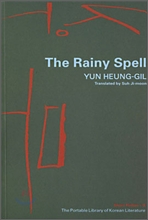
As fall begins here in Korea and the leaves turn orange and red the rains seem to be subsiding. Fortunately for me, a rain lover, I caught one last pulverizing pour and found myself picking up The Rainy Spell by Yun Heung-gil to match the mood. This translation was done by Suh Ji-moon and published by Jimoondang Publishing Company in 2002 from the original Jangma of 1973. As North and South divisions continue on as key political and even sociological and cultural components of the region I found this read a gem. Although many of the other books I’ve read here also deal with this subject matter, this one deals with the division at its face as well as through the metaphor of rain.

As I sat in a café in Sangmu, I occasionally looked out at the onslaught of rain even as rain poured in the authors description. This being the case I felt especially drawn into Heung-gil’s tale. The narrator is a young boy forbidden from leaving his home, a home racked between two families with sons fighting on either side of the political division in its initial phase. The source of his incarceration came from his having sold information about a visit from his uncle to the local police for chocolate. His uncle was a fighter for the north, who had been living with his communist associates on Geonji Mountain. Consequent to the divulgence of the information, his father had been taken to the local police station and beaten until he had a permanent limp and all joy removed from him. The writer hardly took sympathy with the north in his description of such a beating. Rather, Heung-gil paints the portrait of the two young men fighting for either sides with glowing reverence for the Republic Army's Jun, the pride of his maternal family and the narrator's uncle and the converse for his paternal family's pride of the same age and soldier for the People's Army. His uncle Jun is painted as an articulate and well thought out athlete while his paternal uncle was portrayed as a scatter brained believer, who only came into maturity with winters spent starving in the People’s Army. The story, while somewhat political, only uses this as the cornerstone upon which the foundational elements of this literary structure are built.

The story reckons with the familial pains of the division. With vested interests on both sides of the conflict, the author describes a large family torn apart by the events. The narrator, only a young boy, ably suits the description of such a story, as he describes the in house events without making too many of his own judgments. Instead, he tells of the tears and infighting of his elders, facilitating the mood and confusion of a family sundered both literally and figuratively. This is the story of the pains of families throughout not just this conflict but also of the modern civil wars of the nation state itself and perhaps of nationalism generally. It tells of tears and buttresses them with the deluge of the sky in a tumultuous rain which desolates hearts and even reshapes the novel's landscape.

Sunday, October 10, 2010

From San Francisco to South Korea on Route 1


As Said argued in Culture and Imperialism, the core of the British Empire and of cultural generally was defined by the literary form of the novel. Though the times have changed and television, movies, and the internet form the definitions of contemporary culture, I have turned to the literary novels of the second half of the twentieth century of South Korea in attempting to acclimate to my new surroundings here in South Korea. As such I found a series of translated novels, published by the Jimoondang Publishing Company of Seoul. One in this series I’ve read thus far is titled Deep Blue Night translated by Bruce and Ju-Chan Fulton and published in this series in 2002. The piece was originally published as Gipgo Pureun Bam by Choe In-ho in 1982. This particular work in the series appeals to me because its heroes are on a sojourn through California, from San Francisco to Los Angeles, by way of Route 1 - a trip I have taken well more than a dozen times myself.

The story captivated me by recounting my own experience of traveling from San Francisco to Southern California in a detail I haven’t felt since the first time I took the trip. Choe recounts the way the homes in Carmel hang over the beautiful sands below in a style that moves quickly and leaves no trace of the experience lacking. The tale is wrought with indulgences commonly forbidden in South Korea, such as the use of marijuana. Choe uses these indulgences to emphasize the cultural abyss between South Korea and the U.S., which I have seen and felt in this side of the Pacific. The author transforms the use of marijuana as one of the two obvious metaphors in the story. The characters Jun-ho had left his wife and children behind in Korea before coming to the states, having gotten in trouble for smoking marijuana, and had abandoned Korea for the states in search of a different life. This, coupled with the actual trip itself, outlines a journey for both characters through a couple of years of self searching.

The narrator and voice of reason, tells the story of his friend, a mirror image of himself, except that within the foreign Korean community of Los Angeles his associate and travel companion is of far greater disrepute. The story lends itself to an outline of the feelings of culture shock as transformed into a cultural nationalism itself. For the western reader, the story has several levels of utility. The story outlines at the outset the nature of Confucianism, Korean style, from solidarity to social castigation and deference based upon age, and just reads fluidly.

The expectation of arrival builds towards a conclusion each character begins to approach. Choe writes a tale of life in America as a journey not just into debauchery from the point of view of Korean values, values Choe pens into the narrator's reflections, but into cultural annihilation for the two characters. Choe almost uses the form of the novel as a manifesto of return to Korea. The arrival at Los Angeles eventually no longer represents a conclusion of their journey back to their home there but signifies the desire to return to Korea itself. Choe outlines a journey towards the comforts of ones own culture. In this respect the novel also explains much of the culture of Korean solidarity which I have encountered in my time here. Many of my Korean friends quickly jump to the protection of South Korean culture as a highly valued commodity even as western forms of culture deteriorate existing Korean cultural artifacts. This sentiment has political backing too. Haksoon Yim, the Director of the Department of Policy Development in the Korea Culture and Contents Agency, has written a book entitled The Emergence and Change of Cultural Policy in South Korea, published by Jinhan Book of Seoul in 2003, arguing this point lucidly. Deep Blue Night reads well and appeals to Koreans and Californians as well. It also sketches a cultural encounter between divergent world views and cultural nationalisms increasing in the frequency of their exchanges.

Saturday, July 24, 2010

US-South Korean Relations, A Dynamic Affair


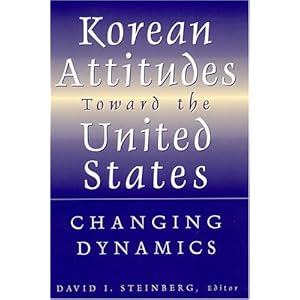
I’ve only just arrived in Korea about five weeks ago. I don’t want to live obliviously as so many Americans seem to do here. With this in mind I set out to learn some of the history of Korea and some of its culture. I’ve digested a short course of books on the country and also on the city in which I live. Given Hillery Clinton’s visit to Korea in the past days and the George Washington, a US supercarrier, conducting war games off of the coast of South Korea’s port city of Busan one of these books seems more relevant right now. Edited by David Steinberg of Georgetown University, Korean Attitudes Toward the United States: Changing Dynamics, published in 2005 by M. E. Sharp Inc., presents a primer for contemporary South Korean international outlooks. Though many professional academics have contributed to the work I would like to note at the outset that most of them seem to begin their appraisal of these relationships from a strongly biased opinion in favor of the continuation of US military presence in South Korea. As I have learned since arriving here in Kwangju that regularly both pro-American and Anti-American protests rage here, I think this overwhelming bias within the book worth of note.

The book, to its editor’s credit is arranged extremely well. Each of its sections cover peripheral as well as pertinent topics from comparative studies and statistics to structural interpretations and diplomacy. Unfortunately their remains a vast dearth of anything remotely cultural. The cultural components of the book are purely explicative and only considered as secondary to international relations or else political conditions. These caveats aside the book has a lot of interesting data and explication to consider.

William Watt’s essay “Changing Perspectives in U.S-Korean Relations and the Rise of Anti-Americanism" by far out weighs the other chapters in terms of the mass of data available. The chapter consisted of a vast corpus of statistics on Korean attitudes. I particularly found the table on page 268 interesting. It suggests that South Korean public opinion remains balanced between its outlook on China and the US. Given that China’s economy continues to rise and the US continues to decline this table and others indicates that Sino-South Korean relations are becoming significantly stronger. While the presence of the US military in South Korean increases disputes over sovereignty within the peninsula, China continues to play the role only of economic partner. This enables China to continue to improve relations while the US seems to continue aggravate their ally. The US and Korean military alliance centers on a fear of Kim Jong Il’s impotent aristocracy. This alliance does not fuel the aggravation but the perpetuation of US bases inside South Korea does for a portion of the population.

Watt's Statistics also reveal other striking, and for me surprising, statistics. For example a table on page 274 show that of those surveyed 59% think the US is the benefactor of the US-South Korean military alliance, with only 37% thinking that South Korea benefits. A statistic which bears relevance in my own politics jumps off of page 275: of "US led efforts to fight terrorism," 67% oppose and 13% favor. Given the emphasis in American media of the strength of the US-South Korean alliance, I found it quite revealing that Koreans largely oppose the US in its crusade. I found it a breath of fresh air. As several of my new friends here have explained, the invasion of Iraq and other 'counter terrorist' activities of the US in recent years have crossed many important political lines. Living in San Francisco these past years I had begun to think that only my friends therein quoted the Geneva Conventions, but I have had them referenced to me here as well.

Both citizens of the US and citizens the US's allies didn't see the Bush regime's invasion and occupation of Iraq as either justified or legal. Several less numeric data sets found their way into the study showing the reasons so many South Koreans grow cold over continued US military involvement on the Korean Peninsula from American egoism to US policies heightening South-North tensions. Of the last concern, many intoxicated Korean men have noted the desire to see all Korea eventually reunited into a single Korea. The political moves made by the US prevent this eventuality in the eyes of many people here.

William Drennen’s contribution unfortunately spends its pages attempting to find US hands clean of the disastrous and violent suppression of the people’s movement against the military dictatorship of Chun Doo Hwan: The Kwangju Massacre. I have had the opportunity to end up living in Kwangju, which has a massive park and memorial to remember the people lost in the military suppression. People I have spoken with who lived through the affair related seeing children beaten bloody and women raped in full view of the public. Furthermore, the military cut the telephone lines out of the city moments before they began their week long blood sport. This prevented neighboring cities and families from hearing of the full extent of the bloodbath. Other books I will review later explain that reporters on the scene later described the army‘s relentless battery of anyone within reach by sprint as "human hunting."

Drennen does a fairly inadequately researched outline of the violence which the people of Kwangju suffered in the days of murder by Hwan’s troops before a section he notably entitles “The Myth of US Responsibility.” Within this section he dismisses both American and Korean commentators as ignorant of the chain of command. This in his assessment leaves only Hwan's regime responsible. The facts, which he attempts to dismiss rhetorically remain that the South Korean military received a go ahead to conduct the operation entitled “Fascinating Vacations” from the US military. The critical point here is that while the US government often claims that it is taking military action to prevent humanitarian crisis to justify its own infractions against sovereign states and peoples, it could have just as easily and simply said that the operation couldn't be conducted to prevent this slaughter and didn't.

Other chapters are generally descriptive. Most indicate a growing movement of ‘anti-baseism’ or a growing desire to see US bases removed and full South Korean sovereignty brought to the now full fledged democracy. While these chapters tend to focus on the growing sentiment toward a desire to see the US military presence removed, the authors readily qualify that many South Koreans in fact remain desirous of a good relationship with the sole global military superpower. Though many here in South Korea rally for the removal of US bases from the Peninsula, others wear shirts bearing the US flag. Even those who have expressed negative opinions about the continuation of US presence in South Korea to me have often bought me a beer and even treated me to whole night out while discussing their political concerns. My own brief experience here has buttressed my appreciation of the expositions of this book.

Saturday, April 10, 2010

North Korea: a Documentary

One of the most interesting documentary films I have watched is "Welcome to North Korea." The only problem I have with it is that it does not lucidly put North Korea (or South Korea for that matter) into an historical context. As a tremendous complement to this documentary I highly recommend the scholarly work Korea's Place in the Sun: a Modern History (New York: W.W. Norton & Company Inc.,1997 ) by Bruce Cumings. The biggest problem with any information about Korea is that there is so little information on Korea in the English language. Most East Asian studies programs at universities focus on China or Japan. North Korea is a kind of exotic topic viewed as a case study for totalitarianism. Bruce Cumings work puts all of Korean history into perspective. I ask that those who watch this documentary do not do so without taking the time to look into Korean history. Korea's struggle against Japanese occupation and the way Korea was divided up by the US and Soviet Union after WWII helps explain a lot about current circumstances in the region.


(I cut and pasted this info embedded into the Youtube posting: WELCOME TO NORTH KOREA
Country of production: Netherlands
Year: 2001


WELCOME TO NORTH KOREA is an unusual tour document from the perspective of a Dutch film crew. In this country like no other, gigantic monuments to heroic leaders are seen by almost no one, deluxe hotels hold next to no guests, and traffic police direct traffic that does not exist. Those few foreigners who do visit the country are told straightforwardly about the superhuman feats of the supreme leader Kim Il-Sung, and his son, the dear leader Kim Jong-Il. Those feats seem to be the subject of every public event. Meanwhile, somewhere on the countryside, scores of people die of hunger and are buried three bodies to a body bag. WELCOME TO NORTH KOREA's filmmakers certainly revel in the exoticism of their subject, especially in the pervasive voiceover. But they also show something of the reasons for that self-cultivated exoticism.

Director: Peter Tetteroo
Script: Peter Tetteroo with Dr. Raymond Feddema
Cinematography: Pieter Groeneveld
Production Company: KRO Dutch Television
)