I just found out that I will be teaching "Fundamental Philosophical Questions" in the winter semester, along with my course in the Department of Visual Arts, "Art Theories." Local University of Ottawa lore has it that the philosophy department split what is usually "Introduction to Philosophy" into "Fundamental Questions" and "Great Philosophers" as a concession to the Analytic/Continental divide. I'm using the fundamental questions to add several figures that aren't usually included in the canon (I've done this before with Great Philosophers as well). Here's what I've got after a few hours of work:
This course is an introduction to several of the fundamental questions of philosophy. We will be reading a variety of material dedicated to the search for the ‘good life.’ We will see that what the good life is has its own history, as we analyze texts ranging from Plato’s Republic to Frantz Fanon’s The Wretched of the Earth. We will see how such a form of life is thought as an idea of harmony, religious devotion, a rational pursuit, a product of self-exploration and self-realization, and finally, as a mode of social involvement that seeks to appropriate and transform a way of life denied to historically marginalized groups and peoples.
After the usual suspects like Plato, Aristotle, Augustine, or Rousseau (culled from Charles Guignon's anthology The Good Life), we'll spend a significant amount of time working with the themes of existentialism and alienation as a way into Léopold Sédar Senghor's "Negritude: A Humanism of the Twentieth Century" and Fanon's "On National Culture." This will be a whole other way to ask what the good life is.
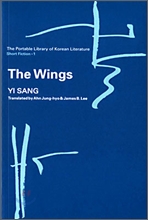
A good friend of mine I met in Korea, and a well known artist here as well, recently recommended the book reviewed below. It turned out that the book is well known and taught throughout middle school and at the university level as well. I read it without knowing what was coming and nothing about the author making the visit into its story all the more dazzling. On this personal note, I will not be giving away any of the sordid details of this work of art. Before we set our feet upon the plain and begin our journey, I must say that this book reads like a sojourn in the self. It carried me to places within, I hadn’t visited in epics gone by in my heart. If you care the slightest about literature, you must spend time in these pages.
Yi Sang’s The Wings, accompanied by the equally, if not more psychological Deathly Child, and Encounters and Departures, dances with realism, surrealism, and early twentieth century avant-garde while moving fluidly - though unexpectedly - between essay, dialogues within narrators' thoughts, poetry, and even song, in one seamless flow. Published by Jimoondang Publishing Company in 2001 and translated by Ahn Jung-hyo and James B. Lee from the original 1936 Korea Journal publication, this book has a history of thorough examination here in Korea. The book serves as seminal text in Korean literature for obvious reasons. The first two paragraphs alone made me put the book down to think about what the horizon had in store upon ascent. The allegories and metaphors pushed me forward on the trek and twists and turns came unexpectedly at each pass. While the term ‘twist’ gets thrown around too often, I haven’t felt this taken aback since the cliché of ‘becoming unplugged’ came into regrettable vogue after that unnameable movie was released some years back. But perhaps these short novels, three, topped even that cliché too.
Given the release of numerous translated Korean works of famous literature by the Jimoondang Publishing Company, it is noteworthy that this book was published first in the series. Here, on this site, I’ve taken the privilege of discussing several of the books in this series, but I must say if you read only one of them, this is the one. To further praise these tales I add that I will actively seek out other works by the author in the immediate future.
Yi Sang, in allusion, offers these stories as confessions of his own history. Though no doubt shaded by symbolism, they tell the history of a man who lived the sort of life I think most people fear they may live, perhaps secretly. For this reason the narrative all the more moves its readers' hearts. The characters, and the author lived, loved, and suffered as real humans do. He leaves no trace of his true character and his characters alone. He offers himself up in the form of his protagonist as an inveterate liar, with passages and tails within tails to back up the confessions of these and other personal defects.
The characters read like friends we all have and they have their basis in his own. The allegories and allusions, though thick, barely cover our real lives, the pains of poisonous relationships, and the truths we hide from ourselves and others. Shocking is the discovery of this book only while living here in Korea. I think translations of these tales should/could have easily found there way into the classrooms of my own educational history. These remarkable journeys into this text made me burst out laughing in cafés in downtown Gwangju. And in the same sittings I all but wailed as well. What a strange sight I must have been while crossing these stories’ pages. What strange sights were seen in them too.
Before the US government and other various political elites flipped out over WikiLeaks sharing secretive diplomatic information, WikiLeaks shared leaked information on the war in Iraq and Afghanistan. Who really cared that a video was released of humans being shot down excitedly on video by US soldiers? This exposed slaughter barely made a splash in US news media. WikiLeaks has revealed that which most people already knew: politicians lie and war kills people. Although, elites do not like feeling exposed so candidly. In a sense Big Brother is getting Big brother-ed. WikiLeaks makes the truth officially known. Not conspiracy theories, just raw reality. Truth can be stranger than fiction. WikiLeaks inspired something new. Governments and corporations now must battle with computers geeks over the security of data, the dawn of globalized Cyber Wars begins.
According to the Continuum website, today is the release date for Freedom and Nature in Schelling's Philosophy of Art in the United Kingdom and the 'Rest of the World.' North and South Americans will have to wait until February 10, 2011. I received my author's copies a few weeks ago, so I can vouch for their hardcover existence.
I first wrote Continuum with my proposal for the book on December 2, 2009, and I received my copies on November 18, 2010. That seems--this is only my first book--like a quick turn around. I've traveled from furious revising and excitement, to apprehension, to wanting to modify extravagantly the galley proofs, to apprehension and doubt, to, with the book in my hands, excitement.
The hardcover price is prohibitive for most of my readers, I know. If you want to read a copy, I have two suggestions: 1) order it for your library, or, 2) if you've got a bit of background in Schelling, write a philosophy or aesthetics journal and ask for a review copy. This could get you both a hardcover copy of the book and a line on your CV. The more critical interest, the more likely we see a paperback edition.
Update: I forgot that I had yet to post Jeffrey Reid's blurb about the book. Now seems like the time:
“Philosophy of art provides a privileged opening onto the complexities and metaphysical dimensions of Schelling's system, an amorphous construction that extends through the diverse productions of the philosopher's lifetime. Fittingly, Devin Shaw has adopted a genetic approach, following the philosopher’s virtually inchoate accounts of art in his early writings, through its explicit embodiment in his philosophy of identity, to the later writings on art, which, because of their apparently marginal character, are usually overlooked. Dr. Shaw’s original and important contribution shows how Schelling's philosophy of art is informed by his earlier philosophy of nature, while anticipating his later work on the metaphysics of freedom and his crepuscular writings on mythology.” – Jeffrey Reid, Associate Professor, Philosophy, University of Ottawa, Canada
While I was preparing my talk for the RPA (yeah, I'm going to stop talking about it pretty soon), I read Stuart Elden's Terror and Territory (University of Minnesota Press, 2009). As I've been revising the paper, it has become clear that I've left much of the sovereignty talk behind, which means I won't be discussing this book in that essay. I highly recommend reading Elden's book, and here's why...
In general, much of this discussion of sovereignty, as it's been framed after Agamben has been, at least for me, has been conceptually suffocating. Too much sovereignty and theology, as if there weren't other important problems lurking behind the sovereign. Elden, to his credit, avoids this kind of talk. From my essay:
Insofar as territorial integration is part of the globalization and intensification of capitalism, Stuart Elden’s Terror and Territory shows how an analysis of sovereignty (both its projection and its collapse of absence) can be compatible with a critique of capitalism, when he reconstructs both how the ‘logic of integration’ (as shared—or coerced— political, economic, or ideological commitments) has been gradually accepted within international law, and how the use of humanitarian and military intervention has been normalized as a technique to maintain territorial integrity.
His account is more nuanced than Agamben's; Elden points out that Agamben’s incomplete account of the state “demonstrates a more significant weakness in account for the relation of sovereignty to territory." Because he proposes the camp as “the hidden paradigm of the political space of modernity,” Agamben’s analyses focus on the intensification of sovereignty, without pursuing the consequences of “the absence or weakness of sovereign power.”
By contrast, Elden shows how the 'dialectic' of state sovereignty and its absence has lead to the contemporary 'logic' of intervention. He shows that intervention has been justified on three grounds. First, there is the inability of a state to protect its population from political and environmental catastrophe (including genocide, war, famine, and inability to protect refugees); these failures can result in humanitarian intervention. Second, a state may fail to exercise a monopoly of violence, which allows non-state actors (increasingly classified as terrorists) to operate within its territory. Third, a state may fail to control its borders, which leads to an increased threat of regional or global instability. Increasingly these distinctions have been collapsed through the “clumsy equivalence” (p. 172) of justifying intervention.
I would give this a stronger political (neo-Marxist?) twist: that intervention has also been used to prevent or interrupt challenges to hegemonic powers through the transformation or, if a cumbersome turn of phrase can be pardoned, the trans-integration of political, economic, or ideological commitments, the redistribution of the means of production or the attempt to integrate within an alternate regional economic system of distribution. One need only think of how the US interferes in Latin America under so-called democratic pretenses. This geographical zone is beyond the limits of Elden's inquiry, but it might help provide a fuller picture of sovereign relations outside of the framework of the war on terror.
I would suggest, for a reader with a background in philosophy, that you start with the fifth chapter, "Territorial Integrity and Contingent Sovereignty," to get the historical background on the problems raised by Elden's analysis, and then return to the start. You might also find the first chapter, analyzing the rhetoric of the Bush adminstration and other neo-cons a bit too historically close to home, for we are familiar with much of the details (though it's there to contrast with the territorial strategies of Islamism). However, historians and geographers will one day need to see what progressive thinkers thought about such rhetoric--and for those of you familiar with one of the talks at the RPA--it's better Elden than Bob Woodward.
The Philosophy, Interpretation, and Culture Student Alliance at Binghamton University (S.U.N.Y.) Presents:
The Revolution of Time and the Time of Revolution
A conference
The 25th – 26th of March, 2011
Keynote Speaker: Dr. Peter Gratton, Assistant Professor of Philosophy
University of San Diego, CA
What sense of time is produced through radical politics? Is the understanding of time as future part of a radical imagination? If the commitment to radical social change involves looking forward into the future, will that leave us with a sense of futurity that depends on the linearity of yesterday, today, and tomorrow?
To interrogate the emergence of radical creations and socialities, we welcome submissions that theorize time as it relates broadly to politics, cultural conflicts, alternative imaginaries, and resistant practices. Time has historically been thought and inhabited through a variety of frameworks and styles of being. At times the present repeats or seems to repeat the past. There are actions that seem to take place outside of time, to be infinite or instantaneous. Theories of emergence view time as folding in on itself. Indigenous cosmologies and Buddhist philosophers put forward the possibility of no-time or of circular and cyclical time.
The radical question of time is one around which the work of many scholars has revolved: Derrida on the to-come [a-venir] of democracy, Negri’s work on kairos, Agamben on kairology, Santos on the expansive notion of the present, Deleuze and Guattari on becoming. This heterological list is far from exhaustive, while hinting at the depth of the theme that our conference cultivates. A central political concern, time invokes our most careful attention and the PIC conference provides the setting for this endeavor. We must find the time for time.
At its core, this conference seeks to explore the relationship between time and revolution. Time here may mean not just simple clock and calendar time but rather a way of seeing time as part of a material thread that can go this way and that, weaving together the fabric of political projects producing the world otherwise. Ultimately, the question of time fosters a critical engagement with potentiality, potency, and power; as well as with the virtual and the actual, of the to be and the always already.
We seek papers, projects, and performances that add to the knowledge of time and revolution, but also ones that clear the way for new thinking, new alliances, new beings.
Some possible topics might include:
• Radical notions of futurity, historicity, or the expansive present.
• Conceptions on the right moment of action.
• The political reality of time as stasis or cyclical.
• The colonial creation of universal time, and decolonial cosmologies of time.
• Work on thinkers of time and revolution.
• Work on potentiality, the virtual, and the actual.
• Capital and labor time.
In keeping with the interdisciplinary emphasis of Binghamton University’s Program in Philosophy, Interpretation and Culture, we seek work that flourishes in the conjunction of multiple frames of epistemological inquiry, from fields including, but not limited to: postcolonial studies, decolonial studies, queer and gender studies, ethnic studies, media and visual culture studies, urban studies, science and technology studies, critical theory, critical animal studies, continental philosophy, and historiography.
Workers/writers/thinkers of all different disciplinary, inter-disciplinary, and non-disciplinary stripes welcome, whether academically affiliated or not. Submissions may be textual, performative, visual.
Abstracts of 500 words maximum due by Feburary 1, 2011. In a separate paragraph state your name, address, telephone number, email and organizational or institutional affiliation, if any.
Email proposals to: pic.conference2011@gmail.com with a cc: to clawren1@binghamton.edu. Or by surface mail to: Cecile Lawrence, 14 Alpine Drive, Apalachin, NY 13732. Emailed submissions strongly preferred.
I think all the coverage about WikiLeaks and the turmoil it is causing global elites speaks for itself. The 1975 poem "Hadda Be Playing on the Jukebox" by the late Beat poet Allen Ginsburg is most fitting. This rendition by Rage Against the Machine has always been a favorite of mine:
It had to be flashin' like the daily double It had to be playin' on TV It had to be loud mouthed on the comedy hour It had to be announced over loud speakers
The CIA and the Mafia are in cahoots
It had to be said in old ladies' language It had to be said in American headlines Kennedy stretched and smiled and got double crossed by lowlife goons and agents Rich bankers with criminal connections Dope pushers in CIA working with dope pushers from Cuba working with a big time syndicate from Tampa, Florida And it had to be said with a big mouth
It had to be moaned over factory foghorns It had to be chattered on car radio news broadcasts It had to be screamed in the kitchen It had to be yelled in the basement where uncles were fighting
It had to be howled on the streets by newsboys to bus conductors It had to be foghorned into New York harbor It had to echo onto hard hats It had to turn up the volume in university ballrooms
It had to be written in library books, footnoted It had to be in the headlines of the Times and Le Monde It had to be barked on TV It had to be heard in alleys through ballroom doors
It had to be played on wire services It had to be bells ringing Comedians stopped dead in the middle of a joke in Las Vegas
It had to be FBI chief J. Edgar Hoover and Frank Costello syndicate mouthpiece meeting in Central Park, New York weekends, reported Time magazine
It had to be the Mafia and the CIA together starting war on Cuba, Bay of Pigs and poison assassination headlines
It had to be dope cops in the Mafia Who sold all their heroin in America
It had to be the FBI and organized crime working together in cahoots against the commies
It had to be ringing on multinational cash registers A world-wide laundry for organized criminal money
It had to be the CIA and the Mafia and the FBI together They were bigger than Nixon And they were bigger than war
It had to be a large room full of murder It had to be a mounted ass- a solid mass of rage A red hot pen A scream in the back of the throat
It had to be a kid that can breathe It had to be in Rockefellers' mouth It had to be central intelligence, the family, all of this, the agency Mafia It had to be organized crime
One big set of gangs working together in cahoots
Hitmen Murderers everywhere
The secret The drunk The brutal The dirty rich
On top of a slag heap of prisons Industrial cancer Plutonium smog Garbage cities
Grandmas' bed soft from fathers' resentment
It had to be the rulers They wanted law and order And they got rich on wanting protection for the status quo
They wanted junkies They wanted Attica They wanted Kent State They wanted war in Indochina
It had to be the CIA and the Mafia and the FBI
Multinational capitalists Strong armed squads Private detective agencies for the rich And their armies and navies and their air force bombing planes
It had to be capitalism The vortex of this rage This competition Man to man
The horses head in a capitalists' bed The Cuban turf It rumbles in hitmen And gang wars across oceans
Bombing Cambodia settled the score when Soviet pilots manned Egyptian fighter planes
Chiles' red democracy Bumped off with White House pots and pans
A warning to Mediterranean governments
The secret police have been embraced for decades
The NKPD and CIA keep each other's secrets The OGBU and DIA never hit their own The KGB and the FBI are one mind
Brute force and full of money Brute force, world-wide, and full of money Brute force, world-wide, and full of money Brute force, world-wide, and full of money Brute force, world-wide, and full of money
It had to be rich and it had to be powerful They had to murder in Indonesia 500000 They had to murder in Indochina 2000000 They had to murder in Czechoslovakia They had to murder in Chile They had to murder in Russia
Since the RPA conference, I've had more time to write on the blog, though I still find I'm a few entries behind. I've been kicking around several ideas, and they haven't yet crystallized. And I've wanted to review a few books, including John Brandon's Citrus County (McSweeney's, 2010). I haven't reviewed much fiction on The Notes Taken, and concerning the last novel (the only novel?) I remember reviewing, what I wrote doesn't quite portray what I liked about it (see what I get for trying to write a review of one of Roberto Bolano's novellas?).
So I'm going to try again from a different angle. Citrus County is John Brandon's second novel; his debut is entitled Arkansas, and is also published by McSweeney's. It was, for the brief time I attempted such lists, one of my favorite novels of 2008. That being said, Citrus County has-- at least regarding my expectations-- a lot to live up to, so to speak.
The novel gravitates toward the daily lives of two adolescents, Toby and Shelby, and one of their teachers, Mr. Hibma, in (I'm sure you guessed it) Citrus County, Florida, on the Gulf Coast. If you're having trouble imagining what people do in that location, you're not alone. So do the protagonists. Which is where Brandon excels as a storyteller. He introduces you to the characters, lets them interact a bit, sets up an unlikely and troubling scenario from which it is difficult to extract the narrative, and then...makes the reader wait. And wait, as the characters negotiate their day to day lives in a tough situation.
Which means Brandon sets for himself a tricky task. I thought Arkansas had it bad, but Citrus County has it worse. He seems to take to heart Vonnegut's advice that, when writing, one must be as sadistic as possible toward the characters to see what they're made of. (From here on out there might be spoilers...) In the long dull days of Citrus County Toby hatches a plan to take hold of his life and give it direction. Obsessed with a bunker he's discovered near his uncle's house, Toby decides to kidnap Kaley, the younger sister of Shelby, who is the only girl who has shown interest in him. Not for any other particular interest other than a test to see if he can really pull off the deed.
And once he does, we wait. We wait through the brief media sensation of Kaley's kidnapping, through the adjustment period for Shelby and her father, we wait through the seasons of the various sports played in Citrus County, and we tarry as Mr. Hibma-- who found his way there through a map and throw of the dart-- tries to decide between integrating himself into the life of local teachers or murdering one of his retiring colleagues. Beyond this, the reader is confronted with the daily life of a place in which everybody assumes something better, or at least more interesting, is happening elsewhere.
My highschool years wasted away in a small suburb, so I know the feeling. Brandon's prose captures that ennui. Since two of the protagonists are adolescents ("They’re adolescents, which means they’re insane," he says in an interview with the NYT book blog), Mr. Hibma's charged with the task of reflecting on how exactly he ended up in that godforsaken part of Florida:
Mr. Hibma missed his youth in general, he realized, back when the knowledge that he was different from other people filled him with pride, not dread. Mr. Hibma was almost thirty. His mind was growing stale, his body stiff, but mostly he was exhausted by the idea of remaining in his life for another fifty years, for another five. He wished his life were a terse novella. He wished he knew how long he was destined to live. He wished he knew whether he'd be murdered or killed by a venomous snake or just waste away of old age.
In contrast to Toby, Mr. Hibma can't seem to hatch a plan and make it happen. However, this isn't always a good thing. Once Toby realizes the bunker and its hostage are a burden, that Shelby's interest is not so bad or invasive, he's got to solve the Kaley problem. But how? the reader is going to be asking, from about page thirty seven onward. Brandon can't seriously be thinking of a simple reconciliatory happy ending, can he? But then why would McSweeney's publish such a possibly sappy novel? Ultimately I can't spoil this part, but I can say that Brandon doesn't take the easy way out.
In any case, let's not rush to the door. On the long winding road to the finale, Citrus County is an intricate picture of small obsessions and quotidian detail, leaving the reader wondering how everyday life could be so enigmatically intriguing.
I'm going in to teach chapter two of Paulo Freire's Pedagogy of the Oppressed in about twenty minutes. It's a challenge to myself and to the students-- all 170 of them, which is about 150 more than Freire recommends for dialogical problem-posing sessions.
The basic idea is fairly clear: that the banking concept of knowledge aims to produce a body of knowledge that integrates people into the status quo, and that problem-posing education aims to show that social relations (including knowledge) are transformed through our praxis. It's up to the students, however, to figure out what that means for their lives.