Thursday, April 29, 2010

Middlesex Philosophy Faces Closure

This isn't a joke. I received this email today from Radical Philosophy, which operates out of Middlesex:
Late on Monday 26 April, staff in Philosophy at Middlesex University in London were informed that the University executive are to close all Philosophy programmes: undergraduate, postgraduate and MPhil/PhD.

Philosophy is the highest research-rated subject at Middlesex University, with 65% of its research activity judged 'world-leading' or 'internationally excellent' in the UK government's recent Research Assessment Exercise. It is now widely recognised as one of the most important centres for the study of modern European philosophy anywhere in the English-speaking world. Its MA programmes in Philosophy have grown in recent years to become the largest in the UK, with 42 new students admitted in September 2009. Middlesex offers one of only a handful of programmes left in the UK that provides both research-driven and inclusive post-graduate teaching aimed at a wide range of students, specialist and non-specialist. It is also one of relatively few such programmes that remains financially viable, currently contributing close to half of its total income to the University's central administration.

Needless to say, Radical Philosophy very much regret this decision to terminate Philosophy at Middlesex, and its likely consequences for the teaching of philosophy in the UK. This is a shameful decision which essentially means the end of the Centre for Research in Modern European Philosophy, a hub for internationally renowned scholarship (http://www.web.mdx.ac.uk/crmep/; staff include Eric Alliez, Peter Hallward, Mark Kelly,Christian Kerslake, Peter Osborne and Stella Sandford). This act ofwilful self-harm by the University must be resisted.
In her article for the 'Comment is Free,' section in the Guardian, Nina Power writes:
Middlesex philosophy has been responsible for bringing contemporary thinkers to a wide audience through numerous international events and collaborations with European and American institutions, as well as cultural venues in London, such as the French Institute and Tate Britain. The postgraduate centre for research in modern European philosophy receives research grants from national funding bodies and there are 63 postgraduate students working on MAs and PhDs. It is an important and unique place – without doubt one of the few philosophy departments in the country where you can study contemporary European thought in any sustained way. It is also one of the only philosophy departments in existence that takes seriously philosophy's relation to other disciplines and to the world at large. The research centre at Middlesex is an institution as important to people not in philosophy as to those within it, and plays a critical role in the intellectual and cultural life of London.
There has been a slew of articles on Comment is Free in recent days lamenting the poor showing of women and ethnic minorities in philosophy and at philosophy-related events (Bidisha, Julian Baggini, Hilary Lawson). Middlesex is one of the few departments whose curriculum addresses this imbalance as a problem for and within philosophy, rather than pretending that the discipline itself plays no role in perpetuating class, gender and racial divisions.
The closure of philosophy at Middlesex will send a terrible message: that philosophy doesn't belong in ex-polytechnics, even when they achieve better results than elite institutions. [...] Closure at Middlesex would be a step back to the bad old days when philosophy meant a few young, white and almost entirely male students at privileged institutions discussing the finer points of formal logic over sherry. Middlesex University must be prevented from dismantling one of the finest philosophy departments in the country: fight to keep philosophy alive.
Do your part:
Sign the petition (our own Mr. Shaw is signatory 4094, update: Mr. Smith 4138), join the Facebook group, and spread the message.

Wednesday, April 28, 2010

Gord Hill, "500 years of Indigenous Resistance"


(PM Press, 2009)

PM Press has reprinted, with minimal black and white graphics, Gord Hill's 1992 piece in the indigenous newspaper OH-TOH-KIN commemorating 500 years of indigenous struggle. 1992 marked 500 years since the "discovery" of Turtle Island by Europeans; Hill's response to culturally insensitive if not downright hateful imperialist celebrations surrounding the date was to provide a concise account of the amerindian genocide while emphasizing the active and noble role of native american peoples in resisting colonization.

As a critically minded Canadian of settler stock, I was glad to see a sharp analysis of Canada's indigenous policy up to 1992 (Hill himself is based in Vancouver). The notion that Canada pursued a kinder, gentler approach to what was considered "the native problem" is refuted by an analysis of British geo-military policy and the systematic dispossession and discrimination which has long ridden on Canadian law and institutions. It's also gratifying to suss out of Hill's short narrative an anticapitalist and generally anticolonialist line. Of interest on this count is his treatment of how slavery in the United States intersected with indigenous struggle.

Hill's account is brisk; it would have been nice, if possible, to read a fleshed out and updated version. The graphics add a nice touch, though some of them are low-resolution. Readers more graphically inclined should know that a comic book version of the text is available from Arsenal Pulp Press.

Tuesday, April 27, 2010

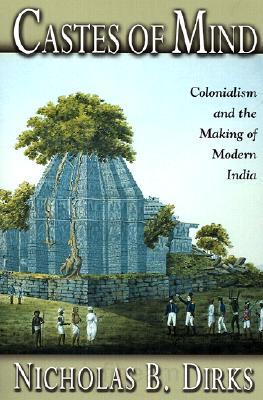
Imagining Caste: Nicholas Dirks' "Castes of Mind"

When people think of India, one of the first thing people pride themselves on is that they know about the existence of caste. Although caste has come to define a culture both outside of South Asia and within it, Nicholas Dirks argues that it wasn't always the defining feature of the region's cultural nexus. Dirks, a professor of history and anthropology at Colombia University and Dean of the Department of Arts and Sciences, argues that orientalist notions of Indian society were produced during the colonial encounter with British. His Castes of Mind: Colonialism and the Making of Modern India – published in 2001 by Princeton University Press – argues that British scholars narrowly focused in on caste, pushing other sociological and cultural considerations aside.

This book is a dense description of the evolution of an idea, largely through the zone of contact between the Indian subcontinent and Western colonialism, both before and during the British colonial occupation of the region. Dirks carefully and distinctively gives the lowdown on the creation of caste in the imagination of Westerners as they came into contact with India. He begins with the Portuguese through the orientalists to Muller and ends with implications of the hardening of caste and its perception as the sine qua non in the minds of Westerners. His implication in such an outline is that Hindu culture has been reduced both in perception and to some degree in reality to this set of social structural relationships.

Dirks presents a complex dualism of problematic which cannot, to my dismay and elation, be essentialized. The notion of caste spread like wildfire in the discourses and imaginations of these Orientalists. Finally the last half of the nineteenth century, especially after the first war of independence in 1857 and the taking of direct control of the occupation by the crown in 1858 there was a rise of great concern over how to rule India. With the orientalist literature now thick in Western archives a great curiosity about India spread. Dirks argues from this that caste became a specifically colonial form of knowledge built on an orientalist vision of the Indian society. This disembodied idea, removed from the social, cultural, and political context of India came to stand in for the realities of the subcontinent's actual composition and eventually grew into a larger part of the composition through the imaginations of people within and without the region. Even the calls to ameliorate jati (caste) in Britain, Dirks argues, grew the phenomenon to its current proportions.

Monday, April 26, 2010

Yukio Mishima, "The Temple of Dawn"


(Vintage, 1990)

Back for round three of Mishima's "Sea of Fertility" tetralogy. The story takes place in the lead-up to the war with the US, and in the reconstruction years following. Action takes place in Japan, Thailand and India. Main character / observer Honda is now middle aged. Kiyoaki / Isao is reborn as a Thai princess who, as a child of six, seems to know all about her two past lives. As she gets older, however, these memories seem to fade altogether. Honda goes through a mid-life crisis, but in a very out of the ordinary form: if he can determine that Princess Ying Chan is indeed the reincarnation of Kiyoaki / Isao, then he will not fall in love with her; if he can determine that she is not his friend reincarnated, then he will love her madly. Honda spends most of the novel poised on this uncanny borderline, trying to devise ways to see the princess naked (so as to see if she has the tell-tale pattern of moles shared by Kiyoaki / Isao).

My interest in the tetralogy, flagging significantly during Runaway Horses, was in large part revived here. I'll explain why by isolating some important themes:

  • Orientalism: The Temple of Dawn illustrates perfectly why orientalism is above all an othering rather than a strictly spatializing discourse. In a sense, the novel "de-naturalizes" orientalism by showing it at work in a Japanese character. Main character Honda, from "the far East", goes south to Thailand and India and there filters his experiences through familiar orientalist tropes. Thailand is listless, hot, sensual, poisonous, languid, etc; India is filthy, pestilential, gory, excremental, beatific, anarchical, and so on. While travelling in the oppressive, "irrational" south, Honda yearns for the cold, pure air of Japanese Buddhism and Japanese reason. If nothing else, this gives the reader a sense of Japanese self-understanding in the lead-up to the Second World War. Also notable on this count is Mishima's / Honda's rendering of princess Ying Chan, whose very body stands in for the unreason of the south (i.e. the Orient).
  • Middle age: Mishima wrote the novel in his forties, well after determining to kill himself upon the tetralogy's completion; one gets a sense that his rendering of middle age in Honda and Honda's wife Rie is part howl of despair, part indictment of weakness and decline. Honda's rationality, profoundly disturbed by his experiences in India, gives way to a late-blooming sensualism rooted in idle perception, while his wife's obedience gives way to a seething hatred. Both of these changes are rooted in the body in profound ways. There's something here like a phenomenology of the middle-aged body that's well worth pondering.
  • Eroticism: The usual Mishima tropes are present: armpits, urine, peeping through holes in the wall, public masturbation, sexual odours, and so on. And as usual, eroticism is tied firmly to death. However, if I'm not mistaken there's also a more explicit connection between eroticism, death and the senses (mostly the gaze) than usual. It's worth asking why, as soon as Kiyoaki / Isao is reborn as a woman, her perspective is virtually left out of the account, and Honda's is emphasized. Perhaps this is reflective of Honda's perceptually based eroticism; his lust is driven by what he can't perceive, and therefore Ying Chan is rendered as opaque to the reader as she is to Honda. (I will also allow that to some degree, Mishima was simply a sexist.)
  • Art and politics: Largely through secondary characters, Mishima explores the relation of art to historical/political upheavals. Left-leaning artists are largely rendered as weak, declining dilettantes uninvolved with and unprepared for the revolution. To be fair, Mishima renders the communist-led, anti-American protests of the time without passing judgment. This is especially interesting given that at the time of writing, he was a laughing-stock among the Japanese ultra-Left.
Obviously there's much to explore in this novel. For prospective readers, I should add the usual proviso that Mishima's prose is plodding, baroque, and self-reflective almost, in places, to the point of meaninglessness. The reader should expect lengthy, narrative-killing discursions on the finer points of transmigration in the different traditions of Buddhism. Despite a seething eroticism throughout, Mishima also manages to render such episodes as a lesbian 69 between two beautiful characters boring and artificial. Finally, the reader will probably wonder why, with so many painstaking descriptions of vines, flowers, skies, temples, mountains and so on, the actual narrative seems to go off a cliff at the end. With these points in mind, patient readers should still find something of value in The Temple of Dawn.

Sunday, April 25, 2010

Reordering the Space of Pakistan, Again?


Many people are well aware that the CIA, an ostensibly civilian organization, has deployed and used unmanned drones to fire missiles at human targets in Pakistan. Even as Predator Drones are being deployed, the unfortunate term ‘afpak’ has saturated the political discourse as well; this term invites its users to further imagine larger scale US anti-terrorist activities in yet another foreign country. Pakistan has increasingly been described as a failed or failing state and political rhetoricians regularly endorse more intervention in its internal affairs. If Pakistan is indeed failing, and perhaps the weekly bombings in Lahore and elsewhere lend themselves to this analysis, then how did it become so?

David Gilmartin, a professor of history at North Carolina State University and Director of the North Carolina Center for South Asian Studies, argues that British intervention in Punjab during the colonial occupation of the region set the stage for the current internal divisions. Gilmartin’s Empire and Islam: Punjab and the Making of Pakistan, published by the University of California Press in 1988, makes the case that the British ultimately caused the contemporary crisis of government in Pakistan.

After the invasion of Punjab in 1849 the British sought allies in the region and chose to make alliances with leaders of families in the countryside. While religion was a central feature of the pre-British Punjabis ruling order, this angle was dismissed in place of ‘tribal’ networks and affiliations. He argues that where urban spaces and religious affiliations were the source of stability and community, new relationships were built based on British whims their ideas of governmental order implemented. Eventually, the British distributed “landed gentry” grants to those they saw as ready to deal with the British. Those who had power in the old system and those coming to power in the new system came into tension.

Gilmartin’s argument centers on the tension created between the social organizational structures of Muslims, Sikhs and Hindus before the British occupation and the new order of power the British created. From this point, through Partition, and up into the present Pakistan has had a difficult time finding a balance in governmental affairs, with various sects vying for power. Some would like to see a state more closely in line with Islamic or Sikh principles while others—often in league with Western partners—would like to see a more secular state. Gilmartin makes a case that a range of disorder has its roots in the British style of reordering the space of Punjab.

Now again Western powers seek to reorder the region. The US continues to offer and give money to the government of Pakistan with strings attached, attempting to produce a space mapped on Western ideals. The CIA operates unmanned aircraft in Pakistani airspace, regularly killing via satellite from Virginia. Given the track record of the West’s intervention in the region and the consequent state of affairs therein, shouldn’t such intrusive measures be reconsidered, especially given the overtly violent nature of this late enterprise?

Saturday, April 24, 2010

India and Maoism: To Be Expected

There is an increase in the activities and influence of India's Maoists known as Naxalites. The name Naxalite derives from the name of the Naxalbari village the movement originated in; located in West Bengal. According to the information in this youtube, they currently have influence over one-third of the Indian subcontinent. Indian activists Arundhati Roy and Ajai Sahni explain how the increasing class divide, and the falsity of Indian democracy, make up the driving force behind the conflict. It is interesting that Maoism (not just in the Indian subcontinent), parroted by many politcal analysts as discredited, is once again surging in popularity. Nepal, for example, is on the verge of total Maoist take over. The Nepalese Maoists also appear to be linked with the Naxalites (see here). The truth of this story is much larger than the topic of India or Maoism. The majority of the world is poor. The majority of the world is alienated from so-called democracies. Guerrilla wars and other forms of resistance to this poverty and alienation are inevitable.

Friday, April 23, 2010

David Harvey, "Spaces of Global Capitalism: Towards a Theory of Uneven Geographical Development"


(Verso, 2006)

David Harvey is one the premiere academic Marxists writing today. He's a geographer by training, but his analysis of post-Fordist capitalism and his materialist critique of cultural postmodernism have earned him a notable place in debates ranging across a number of other disciplines. Unfortunately for the Harvey neophyte, much of his work is packaged in daunting paving stone sized volumes. Spaces of Global Capitalism, clocking in at a mere 148 pages, comprises a lecture series given by Harvey in 2004. It makes for a concise introduction to Harvey and has the added benefit of drawing a neat, if somewhat artificial, division between three levels of ascending explanatory abstraction with which Harvey is concerned.
I should comment further on this last point. Much as Hegel's Phenomenology of Spirit figures as the ladder to the greater Encyclopaedic system, but at the same time a concluding gloss on the very same, Harvey's Spaces of Global Capitalism is structured to reward repeated readings. The first lecture is the most easily digestable. Having made it to the end of the third lecture, however, one will have better grasped the theoretical abstractions Harvey employs and be in a better position to start again.

Lecture 1: "Neo-liberalism and the restoration of class power"
Lecture 1 is a concise restatement of the narrative contained in Harvey's essential A Brief History of Neoliberalism (Oxford, 2005). The global fortunes and local determinations of neo-liberalism are briefly recounted, with particular emphasis on its political causes and mechanisms. Harvey argues that the history of neo-liberalism shows it to be a failed and mystifying economic program masking a retrenchment of upper-class power. He explains with precision neo-liberalism's inherent contradictions and goes on to examine both the neo-conservative and progressive responses to these. Of particular interest to me was his critique of human rights discourses as engendered by and responding to neoliberalism. Harvey ends on a hopeful note.

Lecture 2: "Notes towards a theory of uneven geographical development"
Here Harvey takes a step back and sketches the components of a "'unified' field theory of uneven geographical development" ("unified" in scare-quotes because harvey seeks a dialectical rather than a reductionist or organicist theory). In brief, Harvey uses Marxist conceptual tools (updated and broadened in certain respects; for instance, his interpretation of "primitive accumulation" as "accumulation by dispossession") to make sense theoretically of the kinds of events tracked by the first lecture. The subsection "Capital accumulation in space and time" on pages 95-96 is as concise a statement as one can find of Harvey's general theory (though it should also be understood that for Harvey, theory is not a static but rather a dynamic discourse). One will find that Harvey is open to explanatory tools from a variety of traditions, but, given his penchant for dialectics, is sensitive to where these have potential to become sclerotic and obfuscating. This lecture could be titled: "Harvey's Marxism in Brief".

Lecture 3: "Space as a keyword" 
Harvey's main contribution to Marxism, following Lefebvre, is in pushing space to the forefront of Marxian analysis. More accurately, he has insisted on a variegated category of "space-time" in studying capital accumulation and, by extension, uneven geographical development. In this lecture he analyzes the notion of "space" and how it may be cashed out into three different conceptions (Cartesian/Newtonian "Absolute space", Einsteinean "Relative space(-time)", and Leibnizean "Relational space(-time)"). All of these stand in dialectical tension with each other and form a grid with "experienced", "concepualized" and "lived" variants. One must "roam the grid" to construct or reconstruct the role of space(-time) in a given materialist explanation. There's much fuel for philosophical reflection here, and ultimately one gets a sense of how even at a highly abstract level, Harvey's spatial/geographical thinking can be brought to bear on his history of neo-liberalism and his search for a "unified" theory of uneven geographical development. He signals that such a thinking is "rich in possibilities"; his history of neo-liberalism is a skeleton to be filled in by richer spatializations which must, however, keep in mind the dialectical unity of the spatial grid and not founder on specificities. For Harvey, there are real consequences to such an error: by focusing on place, rather than space, one courts political irrelevance and defeat. Hence his call for an enriched Marxism beyond the impasse of culturalism/postmodernism.

Revolutionary Horizons: Nepal

For some time, the revolutionary movement in Nepal has been of some interest to several of the contributors to The Notes Taken. As I wrote in a previous post, the Maoist movement (now called the United Communist Party of Nepal-Maoist) took up armed struggle in 1996 against the repression of Nepal's government, which, in 2008, brought down the the monarchy and instituted a parliamentary democracy and a Constituent Assembly to reorganize the country's political system. Then, in an unlikely move, for our political times, the UCPN-M quit parliament on the wager that popular support would be a more important force than parliamentary power. The intransigence of the unreformed Nepal Army, who refused to recognize civilian rule, prevented parliamentary reform.

According to Jed Brandt, writing for Counterpunch, 
The Maoists have used their days in this assembly to flesh out their plans for a New Nepal. They drafted and popularized constitutional provisions for a future people’s republic – including land reform, complete state restructuring, equality for women, autonomy for oppressed minorities and an end to Nepal’s stifling subordination to India.
All the kinds of things that the elite would not find so palatable. The result:
Nepal has two mutually-exclusive power structures: one is the revolutionary movement led by the Unified Communist Party of Nepal (Maoist), which has a powerful mass base among the people, a disciplined political militia in the YCL and its People’s Liberation Army. The other is the apparatus of Nepal’s state — held-over from the monarchy, unreconstructed, backed by the rifles of the Nepal Army and the heavy weight of feudal tradition.
Land seizures co-exist with plantations. Old judges still sit in their patronage chairs dispensing verdicts to the highest bidder while revolutionary courts turn off and on in the villages. The deposed king Gyanendra lost his crown, but retains vast tracts of land, a near monopoly on tobacco and a “personal” business empire. Large-scale infrastructure like hydropower remains largely under foreign ownership, but only operate when, and how, the Maoist-allied unions let them. In short, the semi-feudal, semi-colonial system of Nepal is in place but the organized workers and Maoist-led villagers hold a veto.
The two power structures, he argues, are on the fast track to collision, because the Nepalese constituent assembly has until May 28 to draft a new constitution, and its been deadlocked since the Maoists quit. As Brandt reports, seventy members of the ruling party have called on their own leader to step down so that the Maoists can form a national-unity government.

The UCPN-M, in the meantime, has been organizing the people to press their case, holding rallies across the country to demonstrate their popular power, mobilizing hundreds of thousands of people. These rallies are preparation for a massive demonstration on May Day, which
call for workers and villagers to converge on Kathmandu for a “final conflict.” The Maoists are calling for a sustained mobilization, with the hope that an overwhelming showing can push the government out with a minimum of bloodshed and stay the hand of the Nepal Army.
This is good reason to keep an eye on Nepal for the next few months, even if good information is hard to come by. Counterpunch has been very reliable (although I must mention that Brandt's article really pushes the 'final conflict' line; the Maoist struggle  has been going for almost 15 years, one would think that it wouldn't disappear if their demands aren't met by the end of May). I recall, two years ago, a sitting at fellow contributor Joshua's apartment searching the net (and various online bookstores) for reliable-- that is, somewhat sympathetic-- books on Nepal, and finding very few options. The Nepal Maoists, as I've pointed out before, have not captured the imagination of internationalist leftists in the way that the Bolivarian Revolution has. While I can't say why specifically, I often wonder if it has to do with the Maoists' lack of concern with legal-parliamentary routes to power. Their use of violence and disregard for legalism puts them at odds with much of the established discourse on radical resistance. The use of violence is a difficult subject, as it should be; but ignoring it will not make it go away.

Thursday, April 22, 2010

Commemorating Paul Celan

Pierre Joris commemorates the fortieth anniversary of Paul Celan's death (on April 20):
[Celan] left the (very noisy, as he had complained to friends) apartment on avenue Emile Zola, walked to the Pont Mirabeau (the name of a bridge across the Seine near by his flat, but of course also the title of a famous Apollinaire poem) and went into the water. Below, my [Joris's] translation of the last poem Paul Celan wrote, starting it around April first and finishing it on the 13th.
Vinegrowers dig up
the darkhoured watch,
depth for depth,
you read,
the invisible
one commands the wind
to stay in bounds,
you read,
the Open Ones carry
the stone behind the eye,
it recognizes you,
on the Sabbath.
Here's a recording of Celan reading his poem "Corona" (with subtitles):

Tuesday, April 20, 2010

A Short Critique of Benjamin's Fragment "Capitalism as Religion"

Walter Benjamin argues, in an early fragment entitled “Capitalism as Religion” (dated 1921), that capitalism serves a religious function insofar as it “allay[s] the same anxieties, torments, and disturbances to which the so-called religions offered answers.” This short critique will ask if Benjamin’s thesis is adequate to a critique of capitalism, a question that is pertinent insofar as much of contemporary ‘continental’ political philosophy is undergoing a ‘post-secular’ turn.

Benjamin identifies three features of the religious structure of capitalism:
  1. Capitalism is purely cultic, it lacks a theology or specific dogmas. All things take on meaning in relation to this cult.
  2. This cult is permanent; every day demands that one participate in it. As Benjamin states, there are no “weekdays.”
  3. The cult of capitalism is a system of guilt (Schuld, also ‘debt’) and despair rather than atonement.

It is notable that each of these features is structured as an exception to the rule, that each could be read as ‘Capitalism is a religion, except that…’. Beyond the emphasis on paradox in these formulations, Benjamin’s central thesis seems structured to fail. So why insist that capitalism should be understood in relation to religious structures?

The ‘exceptional’ status of capitalism serves a dual purpose in this short fragment. First, it defines what is unprecedented in capitalism vis-à-vis other religious forms: capitalism is a permanent cult that “offers not the reform of existence but its complete destruction” rather than its salvation. Despite these differences with other religious forms, Benjamin’s thesis also establishes a sense of continuity, specifically the possibility of atonement, or as he later calls it, redemption. As is well-known, redemption is central to Benjamin’s “On the Concept of History,” but in the two texts, the concept named by atonement or redemption possesses different features.

In “Capitalism as Religion,” atonement is thought as a threshold (note how this will direct us, elsewhere, to a critique of Giorgio Agamben). The concept of atonement cannot arise from the cult, religious reformation, or even renunciation, rather “the religious movement which is capitalism entails endurance right to the end…the point where the universe has been taken over by that despair which is actually its secret hope.” Only by completely following through with this movement, and traversing this threshold where the relations of capitalism become– as Marx would say– the fetters of the productive forms of society, is salvation possible.

In “On the Concept of History,” redemption is not thought as threshold; Benjamin now thinks it as intervention or event. Rather than pursue the destructive movement through which ‘all that is solid melts into air,’ the later Benjamin (in the “Paralipomena to ‘On the Concept of History’”) writes that “Marx says that revolutions are the locomotive of world history. But perhaps it is quite otherwise. Perhaps revolutions are an attempt by the passengers on this train– namely, the human race– to activate the emergency break.” Or, as he also mentions, the task is to blast open the “continuum of history.” In both cases, redemption is not set off to the future as threshold; it is a subjective intervention in the present. Between the two texts, moreover, Benjamin relocates his analyses; no longer satisfied with a critique of sociological forms (note the references to Weber and Sorel in “Capitalism as Religion”), he now pursues an anti-Stalinist historical materialism (against, specifically, the idea that there are forces of objective necessity in history).

We will leave aside, for the time being, the question of whether the theory of intervention in Benjamin’s historical materialism ought to enlist “the services of theology.” For now, we will confine the critique to whether the thesis that “capitalism as religion” imparts any advantage to understanding either the ideology of, or the relations of production in, capitalism. I think it is self-evident that this kind of critique cannot advance an analysis of the productive forces of society as they are organized by society, so we are left with the question of ideology.

Hence the question: do any of the religious features of capitalism advance our critique? We will address them in the order that they are proposed by Benjamin.
  1. Contrary to “Capitalism as Religion,” we know that capitalism possesses at least one dogma (although the religious metaphor does not advance our critique): the right of private property, i.e. the right of capital.
  2. Here, Benjamin is right: one not need believe in capitalism to participate (even if by force). Because it is a system that structures social relationships, it has to be fought at the level of these same relationships. Thus:
  3. Capitalism, at least in its contemporary form does not disseminate guilt. Instead, it is productive of desire, even to the degree that it can ‘accommodate’ many of the micro-resistances that so many critics of capitalism espouse. Hence the difficulty of struggle.

Finally, does capitalist ideology answer the same concerns that religion does? As Marx wrote, “Religious suffering is at the same time an expression of real suffering and a protest against real suffering,” but the same– the simultaneous ‘expression of’ and ‘protest against’ real suffering– is not expected of capitalism, although religion and other ideological appartatuses do attempt to account for this suffering. Instead of proposing that capitalism should be understood as religion, we ought to separate the specific roles of, and contradictions between, various apparatuses.

In sum, the ‘capitalism as religion’ thesis cannot assist us in social struggle. Benjamin later recognizes that theology can be more pertinent to the oppressed than as a form of the critique of oppression. Nevertheless, we ought to be hesitant, today, with enlisting the services of theology. As Marx recognized, ideological struggles or contradictions are also lived as real struggles or contradictions. But when their concepts are no longer ‘descriptive’ or ‘instructive,’ they become impediments to social struggle. We will draw from “Capitalism as Religion” its implicit conclusion: capitalism is not like a religion; the critique of political economy requires altogether different concepts.